Saturday, February 20, 2021

Operation Archway - 2nd SAS - Len Arthur memories & SAS Operation Archway report - 20 March - 10 May 1945


Operation Archway - 2nd SAS - Len Arthur memories & SAS Operation Archway report - 20 March - 10 May 1945

Map of the operation and day by day progress 20 March - 10 May 1945 as detailed in the SAS operational report. 

Annotated map of involvement in Operation Hardy and Wallace in France August - October 1944: https://maps.app.goo.gl/A1trwDcr6tR1FV5d9 

Please open this map and consult it as you read this report as it includes all the points of reference mentioned in the text. https://www.google.com/maps/d/u/0/edit?mid=1fR1SrUzvm4prwjGKv_3rhlX4Puz6VGQp&usp=sharing

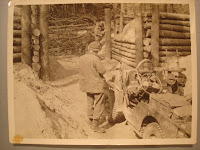
Len Arthur beside jeep most probably May 1945 

Written and collated by Len Arthur (Jnr) - sourced from Len Arthur’s recollections and a copy of the SAS Operation Archway report provided by the SAS Association archive department.

Archway was the next SAS operation that Len was involved in which started in March 1945. Their section of the SAS crossed the North Sea to Antwerp and then drove across Belgium and into Germany aiming for Wesel on the Rhine. Archway was the overall name given to the allied operation into Germany. Operation Plunder was the name given to the specific operation to secure a bridgehead across the Rhine around Wesel and Operation Varsity the name given to the allied paratroop drop. The First and Second SAS were involved in Archway and were known collectively as the ‘Frankforce’ following the name of the commander Lt Col B.M.F. Franks. Len was a member of the Second SAS squadron consisting of two troops each with three sections and each section having three jeeps - 18 jeeps in the squadron backed with transport jeeps and heavier vehicles. 

The initial purpose of the operation was to carry out short range reconnaissance with the airborne in the initial bridgehead over the Rhine then move to deeper penetration through enemy lines attacking communications and pass back information. These plans were soon revised when the break out from the bridgehead was achieved quicker than expected and the squadron soon moved from US command to supporting British armoured corps securing passage for the armoured advance and ‘achieve penetration to a considerable depth’. Although this turned out to be faster than expected it was not without considerable enemy engagement.

Frankforce of both squadrons arrived at Ostend on 20 March 1945 (P1 on map). The following day they drove to Bree in Belgium (P2 on map) and then on 22 March driving to an invasion concentration area West of Issum in Germany (P3 on map). They arrived at 23.30 for a short rest before setting out to cross the Rhine.

Under the command of the 18th US Corps Frankforce crossed the Rhine at Wesel on March 25th (P4 on map) as part of the allied airborne Operation Varsity which was in turn part of the overall Operation Plunder which had secured a bridgehead overnight on the eastern side of the river. The SAS and their jeeps crossed over the Rhine in amphibious tracked vehicles called Buffalos – see Len’s photos - and then marshalled in a wood just outside Wesel  for the night (P5 on map) before starting heading east ahead of the main army groups.  

It was probably their experience of the consequences of the artillery and bombing barrage which flattened Wesel and the surrounding area for days before the crossing that more recently prompted Len to say that if anyone had seen the consequences of such a barrage they would never advocate war as a solution. At various times he had mentioned cattle and horses laying on the ground bloated and ripped open. Propriety probably – as ever - stopped him mentioning the effect on people. I think some of the pictures taken of destruction, clearly from the jeep on the move might have been of Wesel.


On 26 March the 2nd SAS squadron was in action (P6 on the map) and had a ‘successful day’ with the 6th Airborne in a short range recce as the 6th’s unit had yet to cross the Rhine. The 6th were advancing eastwards from Hamminkelm and the squadron was required to protect the open flank to the north. Several Germans were killed and 42 PW taken. Three jeeps were slightly damaged but the personnel of the squadron suffered no casualties’.

Frankforce of 1st and 2nd SAS was divided into the two squadrons on 27 March. !st SAS took over the commitment with the 6th Airborne and 2nd was allocated to the 6th Indian Guards Armoured Brigade which was under the command of the 18th US Corps whose task it was to advance down the road from Wesel to Munster and seize crossings over the Dortmund Ems Canal. (P8 on the map).

As an example of the type of action they were taking part in this is an account of the 1st SAS action that day (P7 on the map) near Erle just North of Schermbeck.

“Major Fraser’s 1st SAS Troop passed up through the forward troops and met a battalion of Canadian Paratroops who reported having attempted to take a wood. They had been driven back by heavy Spandau, Bazooka, and infantry fire, with the loss of eight men. The Canadians were preparing to re-engage the enemy with mortar and artillery fire before attacking again. Major Fraser decided to attempt to take the enemy unawares by attacking from some dead ground on the left flank. The troop approached unseen to within 30 yards of the enemy position which a well camouflaged machine-gun opened up at Major Fraser’s jeep which ran into a ditch. Major Fraser was wounded in the hand. The troop fanned out in front of the wood and Lieutenant Riley’s section destroyed the infantry gun together with its crew. Lieutenant Jenson’s section on the left engaged Bazooka and Spandau positions and silenced them one by one. Lieutenant McLellan engaged the enemy in a group of houses on the right flank and Sergeant White’s jeep was detailed to tow out Major Fraser’s jeep under covering fire. The troop then dismounted and, covered by the jeeps, cleared the wood and eliminated enemy sniper positions. 10 Germans were killed and 32 prisoners taken in this action.”

2nd SAS joined the 6th Indian Guards near Schenbeck (P8 on the map) on 29 March. The armour was confined to the main roads so the jeeps did useful work on the side roads covering the left flank during the advance through Dulman (P9 on the map) to Munster. A lesson that was learned from this period was the need for continued mobility and the avoidance of close country. To the West of Dulmen (P9 on the map) a jeep became bogged down during an engagement. Mortar fire was directed onto the enemy position. One jeep was already on fire and as the other was irretrievably stuck it also was brewed up. Sergeant Vickers, who was wounded, was brought back under cover of a smoke screen. Three jeeps approached three tanks only to realise that they were enemy when fire was opened. One jeep was crushed under a tank and two captured by the enemy as they had to be abandoned under heavy fire. Two men were missing but returned within four days. Another section penetrated 10 miles but withdrew under heavy fire with prisoners.

Still working the north flank of the armour 2nd SAS joined the 8th Corps after Munster was taken on 1 April (P11 on the map). Movement forward into Germany was beginning to go faster and the Frankforce HQ moved to Grevon 2nd April (P12 on the map), Eistrup near Osnabruck, 5 April (P13 on the map), then Melle on 6 April (P14 on the map), 8 April SW of Loccum (P15 on the map).  

Len mentioned this period in this way. Some days they moved quite fast across Germany, passing through small towns with a considerable amount of noise and ensuring their surrender. At the time he had mentioned using church spires, but I’m not clear who would have been doing this. At other times they were involved in clearing tank traps which one of the photos provides an example. Securing river crossings was another objective. Len mentions moving along the bank of a major river which may have been the Ems or the Weser and could see German troops moving from their positions as they appeared.

There was concern among the allies that the Germany army would resort to guerrilla warfare and sabotage as their retreat progressed. They were aware of the plan to train units known as ‘Werwolf’ which at the time was considered a real possibility. Consequently, the 2nd SAS Squadron was placed by the 8th Corps at the disposal of the Military Government and entered Nienburg 9 April with the leading troops and captured several political prisoners, including the Ortsgruppenführer (P16 on the map) [Nazi party poltiical officer] . By 11 April Frankforce HQ moved just south of Esperke (P17 on the map). 

This work for the Military Government now seemed to be the main work of the 2nd SAS. On the 12 April (Point 18 on the map) the report states:

“The 2nd SAS Squadron entered Celle at 05.00 hrs ahead of 15 (S) Div [15 (S) Div 15th Scottish Infantry] with the object of releasing PW and seizing leading party and SS officials. There was no opposition and five members of the KRIPO [KRIPO was the criminal investigation branch of the Nazi Reich criminal police] as well as certain prominent Nazis were detained pending the arrival of the Corps I.B. [Infantry Brigade] authorities.”

Len reported that one of the largest towns they were to enter and take the surrender was Celle to the North of Hanover. He said one of their objectives was to take control of the house and office of the leading Nazi for future investigations. This may have been related to the murders that had taken place a few weeks earlier in the area of concentration camp prisoners who had escaped from a bombed train and then been killed by local people. They found the house and the offices and were then were basically in control of the town for three days until the main army arrived.

The report continues “At 09.00 hrs, No 1 Troop crossed the river Aller by the main bridge which had been partially destroyed and was only practicable for jeeps.”

Len mentioned this crossing and was in the lead jeep. He explained, it was a girder bridge which had been blown, but a piece of the walkway remained. Len’s jeep, driven by Jo Rushbrook edged across this walkway, only to find that unfortunately the walkway had in fact been blown apart. However, Jo thought it would be possible to get across and jump the gap at full speed, so they did! Len said they were greatly rewarded at the other side as after securing the access to the bridge they discovered a wine cellar which was put to good use. They used some tape to say it was under Allied control, loaded up the jeep and shared the spoils around when the Royal Engineers turned up to put a temporary and more stable crossing in place. Len said that there was a Sergeant who stood on the end of the bridge as it was eased across the river to ensure that it was lowered into the chalked pre-set marks using hand signals. He had had quite a bit of the brandy and the hand signals were somewhat erratic leading the bridge to waver around but he somehow managed to lower it into the right spot!

Len mentioned that once across the bridge they had to secure access and this appears to be referred to in the report.

“The German gas school on the East bank of the river was taken over and a recce was carried out along the road Boye - Winsen. There was a short engagement with SS troops north of Celle during the evening” Some securing! (Point19 on the map)

For the 13th April the report states “The 2nd SAS Squadron rested in Celle during the day” (Point 20 on the map). Interesting Len mentioned how they made use of this rest period. In the garage of the house of one of their Nazi political prisoners a Porsche sports car was stored. As Len said, this was too good an opportunity to miss so they used some of the brandy from the wine cellar to fire the engine up and after securing some petrol, drove it around until they had to hand over control to the IB. One of the infantry officers took an interest in the Porsche and a financially beneficial deal was struck!

The report continues in relation to the evening of the 13 April “At night enemy tanks and half-trucks which had been cut off were reported in the area of south of Altencelle”. This was about three miles to the south east of Celle town centre. Celle was close to the operational dividing lines between the British and American forces and the report goes on to mention that “The Americans had contacted them to the south the night before but the 8th Corps [British] were unaware of this”. Close shaves remained constantly in the background, despite the fun with the Porche.

On the 14 April the search continued for German AFS [artillery units?] which had been reported the previous day (Points 23 and 24 on the map) before moving north. The report states “The villages of Bocklescamp and Flarkenhorst were reported clear but in the river eight-tracks and an American armoured car were found abandoned. The latter, which had a 37mm gun, was taken into use and provided much needed extra hitting power”. Almost as good as finding the Porsch, you can imagine the scene.

Between the 14/19 April the 2nd SAS worked with the 15th (S) Div Recce unit “covering the advance area from Uelzen to just short of the Elbe at Neetze” (Points 21 and 22 on the map). The report continues “The Squadron was almost ideally employed over this period, and of very definite assistance to the slower moving Recce Unit which, on the other hand, provided the heavier fire power and armour when the jeeps encountered more than they could engage”.

On the 15 April the Force HQ moved to Schanhorst (Point 25 on the map). The Force of course was the combined Frank force of the 1st and 2nd SAS. They were carefully moving forward fanning out across the area from the HQ. This pattern of reconnaissance can be seen from the work of the 2nd SAS on the 15 and 16 April (Points 26 - 29 on the map). It was north-east of Bargefeld (Point 29 on the map) that “... a troop on recce came under fire from enemy LMGs sited near Gerdau (Point 30 on the map). Fire was returned, but as Gerdau was held by a considerable force of enemy with 88mm guns the troop withdrew to Bahnsen (Point 26 on the map) where the whole squadron and Force HQ spent the night.”

It was also on 15 April that during one of these types of reconnaissance that a troop from 1st SAS found the Bergen-Belsen concentration camp (Point 31 on the map) working with the Inns of Court Regiment. A reference to this event does not appear in the Operational report possibly as a result of focusing very specifically on military issues. It does not take much imagination to realise how difficult it must have been to continue with that focus when confronted with the consequences of genocide.  Len said that at one stage in this period in Germany they were near a concentration camp and could see through their field glasses what was going on but had to press on with their work. This may have been on the early reconnaissance (Point 19 on the map). 

“On the 17 April, 2nd SAS made contact with the 11th Armoured Division at Eimke. Gardau and Gressisuestedt (Point 30 on the map) were reported clear and Barnsen (Point 33 on the map) was cleared during the afternoon with a group of 15(S) Division Infantry on Churchill tanks. A large number of the enemy were captured. Two jeeps were bogged down near the village and were pulled out by L.A.D. Shermans.”

On the 18 April the 2nd SAS were switched to the north-east of Uelzen (Point 34 on the map). “Many PW were taken and a few enemy killed. Lieut Laws was wounded while making a recce on a captured motor-cycle.” Another example of if it can be used - get it going.

On the 19 April Force HQ moved to Bruchterf (Point 35 on the map). The 2nd SAS with 15 (S) Recce led the advance from Bevensen (Point 36 on the Map) to the Elbe on two axes to Breetz (Point 37 on the map) and Neetz (Point 22 on the map). Contact was made with the 11th Armoured Division at Neetze and a recce was made eastward to Bleckede (Point 39 on the map) were it was found that the Germans were maintaining a bridgehead, so the SAS returned with 15 (S) recce to Neetze for the night. It was noted in the operational report that the country around Breetz was very difficult owing to the density of the woods. On the same day to the west 1st SAS entered Luneberg (Point 40 on the map) to seize AA leaders. The troop was kept busy for three days searching houses and cellars and had considerable success.

The operation report records that there then followed a period of rest until the crossing of the Elbe. Frank Force HQ remained at Bruchterf (35) and Major Hibbert’s 2nd SAS Squadron from operation Keystone (moving through Netherlands) joined Frankforce and settled at Eddlestorf (Point 41 on the map) while Major Power’s Squadron rested just up the road at Bohndorf (Point 38 on the map). As there was no further mention of the German bridgehead at Bleckede it appears that retreated and evacuated to the eatestern side of the Elbe.

It was 10 days later that sufficient troops and equipment had been moved into place to make crossing the Elbe a success - it was known as Operation Enterprise. There might also have been some final political and military negotiations taking place about where the Russion zone would end in the West as the Elbe was the agreed line in general but not necessarily the Northern ports near the mouth of the river. The decision to cross the Elbe on 29 April appears to have had a number of factors involved.

Major Hibbert’s 2nd SAS Squadron crossed the Elbe on 29 April at 15.00 hours. It is not clear from the report where the crossing actually took place but from later references it was near Schnakenbeck (Point 43 on the map). The report states that after the crossing Capt Mackie’s troop which had reverted to its original squadron under Major Hibbert, was detailed to report if the area to Gueltzow was clear (Point 42 on the map).  It also appears from this section that 2nd SAS had reorganised the command structure so it is now not clear where Len’s troop was now placed so reference will be made to all SAS actions. On crossing the troop came under enemy shell fire at Schnakenbeck which was being directed at the bridgehead but no casualties were incurred. Other troops were sent to Juluisberg (Point 43 on the map) and Krukow (Point 44 on the map). Both these sections entered Guelzow (42) simultaneously without opposition.

A troop which was sent toward Wangleau (Point 46 on the map) encountered a light flak gun just outside Guelzow but the crew ran away when the jeep opened fire. Immediately to right there were three 105mm guns which were brought under mortar and Vickers fire; the enemy retreated and the guns were destroyed. The report continues with a more tragic report saying that Captn Morris’s troop was held up short of Leutow by SS troops (Point 47 on the map) and in the resulting engagement Capt Morris was killed. It seems that this may have been an encounter toward the end of the war that Len described as it is the closest to his account in terms of the content of the operation report and the geography of the area. Approaching a bridge they – a stick of three or four jeeps, were fired upon by an artillery piece placed on a hill overlooking the river. They took cover and one of the jeeps went up a wooded track leading to where the firing had come from to make a challenge. The jeep took a direct hit and all the SAS in the jeep were killed. The others then returned the fire using their mortars and soon started to get an accurate range. Fire was not returned and when they reached the position the crew had either been killed or had moved off. When they were in the position they could see that they must have trained the gun on the only gap in the trees where the track and the jeep could be seen.

On 30 April Frank Force HQ crossed the Elbe with Major Power’s Squadron and moved first to Juliusberg (45) and then to Kollow (Point 48 on the map). Major Druce’s troop took over from Capt Mackie and continued to recce to Schwarzenbeck (Point 49 on the map) while Capt Mackie’s troop recced Hamwarde (Point 50 on the map) and Worth (Point 51 on the map). As a sign of how fluid the situation was, 2nd SAS was experiencing some rearguard resistance whilst within hours possible surrender situations could develop such as what happened later in the day. In Schwarzenbeck (49) two German officers were captured and one of them said he had come to negotiate the surrender of an SS battalion. Major Barkworth I.O. 2nd SAS, returned with the German officer to the SS Bn HQ at Wangelau (Point 52 on the map) where the battalion was in a state of indecision. The battalion commander would not consider surrendering and after some discussion, Major Barkworth visited the German Div HQ at Poetrau (Point 53 on the map) but was unable to obtain a clear order for the surrender of the SS Bn. However following Major Barkworth’s return to the SAS positions, Wangelau (52) was attacked by a Marine Commando unit backed by some artillery and the SS Commander surrendered with 8 officers and 56 other ranks. This was the same day as Hitler had committed suicide so knowledge of the collapse of the Nazi leadership was probably beginning to seep down to the troops.

With a bridgehead on the Eastern bank of the Elbe secured and crossings in place on 1 May 11th Armoured Division crossed the Elbe (43) on the night 30 April/1 May and moved North. 2nd SAS continued to cover the flank and move closer to Hamburg with Capt McGregor and Lieut Robertson’s troops recced the area West of Schwarzenbeck (49) on the fringes of the Sachsenwald (Point 54 on the map). Then on the 2 May the recce continued West to Bargteheide (Point 55 on the map).

On 3 May Frank Force HQ moved to Luttjensee (Point 56 on the map) and then on to Gross Handsdorf (Point 57 on the map) Major Poat’s 1st SAS Squadron reached Lubeck and moved on to Kiel with 30th Assault Unit (Point 59 on the map).

Although the German forces capitulated on 4 May it was not until 7 May that Admiral Doenitz agreed to an unconditional surrender at Rheims in France and the final document was signed in Berlin on 8 May. Despite this, anger remained, and Len and his colleagues were involved in taking prisoners and disarming German troops in the area around Hamburg. On one occasion they were doing this in an orderly way through the sergeants with the German troops lined up being watched from the jeeps with guns at the ready. From one side a machine gun fired and everyone hit the ground and Len’s jeep swung their Vickers gun around and fired a warning burst in the direction of the fire. Two young boys of the Hitler youth appeared and surrendered. The German officers expected them to be executed on the spot, but Len’s crew told the boys to take their trousers down and indicated to the German sergeant to use a cane instead.

The operation report ends with one simple sentence ‘Frankforce embarked for the U.K. on the 10 May’.

On the ground with the 2nd SAS there was still a considerable amount going on behind this one sentence. After the surrender the SAS were given instructions to return to Wivenhoe. From what Len has said about this journey back to Antwerp they seemed to have enjoyed the drive. Len experienced one last incident when the jeep hit a rock embedded in the ground and as he was stretched out asleep on the kit in the back he was shot into the air and over a hedge. As you can imagine the others went looking for him wondering where he had gone and as luck would again have it he was fine except for some bruises and appeared over the hedge asking if they were looking for him! The jeep was out of action with the steering rods being bent. They managed to get to a local French garage but the Germans had taken all his tools. However, Len saw a fixed vice and they managed to straighten the rods using this.

Arriving back in Antwerp they had acquired along route some bales of silk. They thought they would have some time to trade before they had to leave but were told that they were to go early the following morning. This meant a quick tour around Antwerp in the early hours to find a merchant, it appears they were successful. Len managed to return with a number of bits and pieces. It appears that if one of the SAS were wounded and had to be moved back, they would place acquired items under him in the stretcher for return at a later date. It appears in this way Len acquired two decorated shotguns, a camera and a Nazi dagger. Eric, my cousin remembers the shotguns, I’ve still got the camera and Mum sold the dagger sometime in the 60s.


https://en.wikipedia.org/wiki/Western_Allied_invasion_of_Germany

https://warfarehistorynetwork.com/2018/12/20/the-1st-commando-brigades-invasion-of-germany/


Thursday, December 24, 2020

From Rattery to the World: discovering Captain John Goss 1801 - 1853


From Rattery to the World: discovering Captain John Goss 1801 - 1853

By Vera and Len Arthur

As a young rooky family historian in 1967 I first came across the name John Goss on a tombstone in Rattery churchyard. Goss was my maiden name and the stone was next to my 3xggrandfather’s Isaac Goss but there was no record whatever of a family connection. All there was on the stone was ‘In memory of Captain John Goss who died at sea on the 13th day of July 1853 aged 52’ and that is where things stayed for over 40 years. We now know he died at sea as Captain of the sailing ship Candahar heading toward Java from Jakarta, now Indonesia. How was it that someone from the family of an agricultural labourer living in a small village on the edge of the moors between Totnes and South Brent could have ended up as sea captain travelling to some of the most exotic places in the world?

Of course the full answer will never be known but this is how the pieces of an amazing story have come together so far. The research voyage, as ever continues.

John Goss was born in South Brent to Isaac Goss and Mary (nee Hext) in 1801. Mary was from South Brent but by the birth of their second child, Joanna who died in her first year, they were back in Isaac’s parish Rattery and that is where the family stayed until Mary died in Totnes workhouse in 1852. Another nine children followed. Isaac was down as an agricultural labourer in the 1841 census. Many of John Goss’ siblings worked or married into farming staying in the South Hams but the youngest of them all Samuel also went to sea, became a first mate and lived in Liverpool. The sixth sibling Thomas, was a farmer in Harberton and in 1849 migrated with his wife and seven children to Adelaide in Australia. Hence back to the John Goss connection who probably recommended that they should go.

Socially it is worth noting how the siblings were having to use what opportunities were open to them to survive. My 2xggrandfather William, the third sibling, was a weaver and seemed to sink and die young with the trade in the 1840s. Shipping was one of those industries that went through an expansion in the C19 with employment doubling by 1880 compared with the time of the census in 1851 and following the surplus of sailors after the Napoleonic war. We may never know how and when John Goss went to sea but from his 1851 masters certificate it was clear he saw his home port as Totnes, about 10 miles from Rattery. If his start at sea was from there 10 miles walk is a short distance. We believe Totnes came under the port of Dartmouth and the ship's muster rolls for that port exist but are not online and remain to be searched at the National Archives. At the moment the assumption is that he went to sea young, around 12, possibly through a family connection, a James Goss was a part owner in a ship at Dartmouth.

The first research breakthrough came when British legislation in 1850 required the certification of masters and mates on merchant vessels. These records in the National Archive went online about 2011 and we found a masters certificate for a John Goss who had his hometown as Totnes. Around the same time we also found newly online marriage information of a John Goss about the right age being married in London in 1831. It was reasonably clear that it was the right John Goss as he married a Mary Ann Chaffe from Rattery who was 21 at the time. It seems a love from an early age despite the 10 year age difference and sailor of the world. It was to be a lonely life for Mary, with John away at sea for many months at a time. In the 1851 census, she was down by herself staying with friends in Essex.

Over the last 10 years records of British seamen and shipping in and around Australia have come online covering the 1830s onward and these have proven to be an gold mine of research. John's 1851 master's certificate details his mates and masters experience back to the 1830s on four ships, the William Lushington, the Hope, the Duke of Norfolk and the Candahar. Using this information it has been possible to use the online Lloyds lists and Australian sources to develop a picture and even hear the voice of someone who traversed the world.

Service on the William Lushington predated the 1835 Merchant Shipping Act. It is not clear how far this service would go back but according to the 1834 Lloyds Register the ship was 409 tons, built at Topsham in Devon and registered in London and Plymouth. In 1834 the ship was sailing to Plymouth, North America and again in 1835 and 1837, earlier in the century it had sailed to the West Indies. In 1835 John Goss served as chief mate on the Hope from December of that year to September 1836. On the Duke of Norfolk as his first master appointment from October 1838 to June 1840. On the Hope as master from March 1842 to March 1846 - where his youngest brother Sam was one of the apprentices - and finally as master on the Candahar from June 1847 until he died at sea in 1853. From the Australian Trove newspaper records in July 1842 the Hope under Captain Goss is one of seven ships sailing in what seems to be a convoy with around 2,000 convicts due to arrive in Australia that month. The Candahar is one of the other ships being Captained by Ridley who was also the owner. This may have been the start of the business arrangement with John Goss who five years later took over being the captain and Ridley was still the main owner.

John Goss starts to emerge from the records as a person from a variety of records covering his association with the Candahar as the captain. By 1847 John Goss became master and captain and the ship had been refitted to transport paying migrants from the UK largely to Adelaide, Australia, returning with goods and trading around Australia and nearby countries whilst there. Trips were made almost once a year going out in one non stop voyage of four months. Return trips may have varied as when the Hope came back in 1843 it was advertised as being via Bombay with facilities to transport horses and people.

John Goss the person first hits the news with a report and testimonial from migrants who had sailed with the Candahar from England in 1850. In the 19 August edition of the South Australian Register there is a letter signed by all the passengers attesting to the ‘cheerful kindness of Captain Goss’. All the passengers felt they needed to write and sign this statement to counteract an earlier report in the same paper complaining about the treatment  of passengers on the ‘Ceylon’ a migrant ship that had arrived earlier that year. The testimonial goes on to praise the other officers and charters of the ship, expressing concern that such complaints do not put people off from migrating to Australia. A child was born on the Candahar during the voyage and was christened ‘John Candahar Goss Harslett’ indicating the level of respect during the voyage. He was known as ‘Candi’ until he died in the 1920s

We have been very lucky and have access to three almost daily diaries kept by passengers on the Candahar, two on the 1850 voyage and one on the 1851 voyage. This section covers what we can glean about Captain Goss from the diaries. A second section will use the diaries to provide an overall insight into how the three passengers themselves experienced the voyage from their very different personal and social circumstances. It is with great respect for the memories of these two women and the man that we draw upon these journals. They were often written under the most difficult circumstances and reveal considerable skills of observation and description as well as great humanity. Although we are drawing information from these journals for our own purposes, they stand as significant historical documents in their own right. We are very thankful they have survived. 

Two of the passengers Jane Elizabeth Skinner and David Liston kept diaries during the same 1850 voyage. The David Liston diary has been made available as a copy of the handwritten original by the South Australian archive. I am currently in the process of transcribing and making a typewritten copy which will be deposited back in the archive. There is one more diary which was kept by David Liston’s sister Ellen then aged 12, but this is not as yet in the public domain. She later became a renowned Australian author and poet. David Liston was aged 20 on the 1850 voyage and was sailing with his family. David became an accountant in Australia and lived until 1907. His diary is quite different from Jane Skinner, as he calls it his ‘log’ and is largely taken up with more technical information such as longitude and latitude, wind direction and sightings of birds etc. In the absence of an official log this information has proven to be invaluable, giving a day by day account of progress which we have been able to plot on a Google map [use the link for full information]. https://www.google.com/maps/d/edit?mid=1x0T89M3WaDxhFeFEDPxS5Mqxq92OJLI&usp=sharing 


Jane Elizabeth Skinner, kept a diary which was transcribed from the handwritten form in the 1990s by a descendant and deposited in the South Australian archive. Earlier in 2020 I managed to work out how to pay and receive a copy and the 32 pages of typescript have provided a wonderful human insight into John Goss. Jane Skinner was sailing as a single woman but with her pregnant sister, her husband and her sister's son Moreton. Jane often had responsibility for Moreton and ‘as to Captain Goss he has always given Moreton something and the little fellow is getting quite fond of him’. Later she comments ‘the Captain is such a John Bull but jocular’ and ‘the Captain likes best to keep away from other ships for fear of accident ... he works like one of the men which he has no occasion to do. Of night he gets up every two hours to see everything is going alright.’ Pen pictures of the crew give glimpses of the men John worked with ‘...two of the passengers got up the rigging, much to the annoyance of the second mate, who is a great swearer, but very handsome and light on his feet… he used to be in the Navy but for misbehaviour was expelled’. And a glimpse of working around passengers ‘There are all hands heaving down the sails singing their various songs until the squall is passed over and in a hurry putting them up again… you must look out for yourself then for no one is very polite. They knock and throw their ropes everywhere…’. John Goss advises her to ‘not to form any acquaintance with anyone on the voyage if I can possibly help it because by waiting until I get there I may have a better chance’. She is asked to do some sewing repairs for John Goss and is rewarded with ‘a bottle of [beer?] and a large piece of bread and cheese’. On one occasion when talking to ‘Captain Goss” Jane relates ‘I produced my accordion and played him “The Girl he left behind me” it seemed to affect him. He is so fond of his wife…’. There is another published Candahar diary by a Sophy Cooke who migrated a couple a couple of years later and was published in 1969 as ‘Sophy Under Sail’ as yet, due to the pandemic, I've not been able to access it through inter library loan: it is big on the to-do list.

As Jane mentions toward the end of the diary when the Candahar was moored just outside Adelaide ‘Such lots of people came down to the ship to see Captain Goss. He is so much respected here.’ This was certainly the case and on a later voyage to Australia on the 3rd December 1852 John Goss was asked to give evidence to the Victoria State Parliament Select Committee on the Melbourne to Hobson’s Bay Railway Company Bill. The evidence was recorded verbatim so here we have the voice of John Goss, the closest to a recording that can be achieved. The evidence is technical and about tides, winds and water depths. He explains he has been in the Port a fortnight on this trip but ‘I have been in the Port four times within this last year’. He also describes an accident ‘In my last, I was laying there in a gale when the Aberdeen dragged her anchor and ran foul of me’... ‘It was owing to this accident that orders were issued that have caused the ships to be so scattered around the harbour as they are now’.

Unlike Jane Skinner, David Liston, provides few personal insights into Captain Goss, largely referring to the general ‘they’ when talking about the crew. It is clear, however, that he was allowed to be present and possibly participated in the midday taking of longitude and latitude positions, as well as other details in relation to wind direction and distance in knots travelled. In one departure from this technical approach, he describes in detail the ‘crossing the line’ ceremony which includes this poem from Neptune to the Captain - most possibly written by Captain Goss. 

“Ship Candahar

May 31st 1850

Sir,

Neptune who all sailors know, the wind and tide direct

I send to all on board my very best respects.

To you worthy Captain congratulations send

And hope to be remembered by an old sea going friend.

Unto the passengers and crew the weather being fine

I hope to come aboard tomorrow and … on the line

And when my messenger you see, he is a drunken dog

He will answer all questions and be glad to drink some grog

His clothes are fine, he cuts show, a swell but let him pass

He is quite tame but sure to fill his glass.

The sailors too can drink a drop ‘twill … away all sorrows.

And I will settle all accounts when I board you tomorrow.

I am

Yours …

Neptune”

David’s few references directly to Captain Goss support the view that he was as attentive to the passengers as well as his seamanship. David experienced a stomach upset after eating some preserved - possibly canned? - salmon, and the Captain making the comment that once opened, preserved food needed to be eaten straight away, especially in the warm weather. David also reports the Captain remarking that once the ship reaches the warmer and milder weather nearer to the equator all coughs seem to disappear. There is also a reference in David’s diary that gives an indication of what Captain Goss had to take account of in managing the crew, with one person on the helm sailing the ship in a circle as he lost his bearings and another being thrown 10 feet into the air when the swell catches the rudder.One direct reference to Captain Goss was a bird falling on his head “One of the pigeons [cape pigeons?] fell off the shrouds onto the Captain’s head and glanced off into the water”, which both he, David and the Captain seem to find amusing.

The following year in 1851 another migrant passenger to Adelaide Sophy Taylor also wrote letters to her father about the voyage which by good fortune have also survived. These were published as a book in 1969 under the title Sophy Under Sail. Sophy Taylor was from Clerkenwell in London and worked in her father’s bead and jewellery merchants business. She was the eldest daughter having one sister and two brothers. She was 25 when she made the journey to Australia to marry her fiance who had left three years earlier and had now set up a general store just outside the town. She travelled with her fiance’s widowed mother. Like Elizabeth Skinner [insert some later personal details for Elizabeth above] Sophy Taylor was to experience a hard life in Australia, with her husband going the the ‘diggings’ as part of the South Australia gold rush just after she arrived and married him, then three weeks after the death of her first six week old child in 1853, Sophy also dies.

It is with great respect for the memories of these two women that we draw upon these journals. They were often written under the most difficult circumstances and reveal considerable skills of observation and description as well as great humanity. Although we are drawing information from these journals for our own purposes, they stand as significant historical documents in their own right. We are very thankful they have survived.

Sophy made a number of references to Captain Goss. As with Elizabeth they give insights into the type of person he was and how he ran the ship. It seems that on this voyage Captain Goss’ wife Mary Ann sailed with the Candahar from Gravesend on 24 July 1851 to Plymouth which was the last stop before Adelaide. Some passengers travelled this far and others joined the ship for Australia. Sophy describes the scene when leaving Plymouth Sound on 7 August 1851 with ‘many tears’. She also mentions that ‘The parting between the Captain and his wife when we reached the breakwater was truly heart rendering… it was really quite a scene while she was being let down almost fainting into the boat, to see the passengers and crew climbing up the rigging to give her three hearty cheers. She said “Give three more for my husband”.’ Sophy describes her as a ‘kind, agreeable lady and we all felt her loss’ Sophy explains that her ‘health not now allowing her ever to accompany her husband on his voyages’.

Sophy has a  number of other references to Captain Goss. Early in the voyage she mentions him calling out to the sailors “Look smart, my lads” and calling for the male passengers from below to help pull the ropes. She refers to him being a ‘very agreeable man, jocular and good tempered, answering every question’ and treats us all alike; ‘None of the sailors are allowed to swear if he knows it for he does not like females to hear it’. He clearly kept the passengers informed of progress, such as when crossing the edge of the Bay of Biscay he expressed how calm it was and then when off Cape Finisterre he was not at all happy to be so close to the coast. He clearly helped keep the passengers happy with gentle flattery as Sophy mentions that he stated that he never took out such a respectable lot of migrants before. Later in the voyage she refers to meeting other ships and Captain speaks with them through a ‘trumpet’, all the passengers hushed so as to help the communication.

There is also regular references to his concern about the 129 passengers of whom 33 were children, so when near the equator Sophy reports that he ‘will not allow anyone to sit five minutes in the sun… as although it is the same sun as in England its rays have a very different effect upon the brain’. The passengers were organised into messes of around 15 people to organise collective eating, cooking and other duties with one of each being elected each fortnight as a ‘captain’ and ‘mate’. Sophy refers to her mess as being numbered one with all females. She mentions that ‘Captain often comes down and sits on the stairs at our end of the table to chat with us; he tells us that ours is the only Mess he takes a positive interest in and he feels he ought to protect the unprotected. His advice to us at first was to “keep the men at arms length” and Miss Stone and I have not failed to follow it’. Captain Goss interest in this Mess continues so having just passed the equator on 17 September Sophy reports in her letter a day later ‘I should like to write to you again but Captain has just given me a glass of such beautiful strong cider which has actually got up in my head so that I do not feel particularly bright…’. Sophy describes the crossing the line ceremonies of throwing water, mock shaving, ducking, a lighted tar barrel over the side, sailors dressed up as Neptune and his wife. Sophy says she felt rather timid and asked permission to sit in the Captain's cabin to look on. She says after two hours the Captain came out and gave orders for all to be cleared up and the scene was immediately changed. This was all followed with a feast of 5/- each in the evening with two pigs being killed and roasted, the Captain and his mate at the head of the table.

Later in September she writes that they are passing the island of ‘Trinidad’ which we take to mean Tristan du Cunha, and gives a little pen portrait of Captain Goss

‘This is the Captain’s wedding day, he has been married 20 years. I like him much, he is full of fun and good humour without any foolery or nonsense. When he comes on the poop the question he calls out the man at the wheel is “How’s her head now?” If wrong he scratches one whisker, if right he lifts his hat on one side and says “beau-ti-ful,” He is about the height of Mr Wooley but rather stouter, good features and brown curly hair. I should like you to see his funny ways with us here, perhaps as some of us are coming down the poop stairs he will come behind and take us by the shoulders pretending to push us down, or when Miss Stone and I are taking our evening walks together on the poop he will walk softly behind us, close to our heels when we little suspect him, so on turning around there he is in our path like a post, pretending we startled him. One Sunday evening we were sitting on the deck reading and some one came behind and placed a great hand each side of our heads and there we were in a vice; we felt the hands but could not tell who it could be until we were liberated and then we found it was Captain!”.

I had not long left Plymouth before he found out the object of my coming so of course I often have to put up with a joke about it, but he commends me for doing so and says he shall always come to see me whenever he is in Adelaide. He is too hard upon me for getting so stout; he says “if any of the passengers at the end of the voyage feel inclined to go before a magistrate to complain of the ship’s provisions, he has only to show Miss Stone and me, himself and the First Mate, and they will immediately say to the complainants ‘be off’. So Miss Stone told him it was our contented minds that makes us get stout. “Oh no” said he, “it’s that awful pudding pan that’s under my nose when I look downstairs every morning” and this is the way he is always going on. I do not say there is not some truth in it but it is slightly stretched. When the waves are extra high I say to him: “It’s rather rough Captain.” “Rough!” he says “you are never going to call such a beautiful day as this rough”. So as he never will allow it to be rough when I ask him, Mrs Cooke the other day added “Will you tell us, Captain, when you do call it rough,” “I call it rough, ma’m, when you can’t sleep in your beds.” So you see he is a kind, jocular, good-tempered man, familiar and yet in a way that we cannot be offended, has plenty of good sense, has seen much of life and human nature, possesses great nautical experience and often entertains us with the tales he relates.

I had no thin writing paper of my own so he made me a present of this, for which I have mended one of his shirts and hemmed him a silk handkerchief. Nearly all his shirts he bought in China last voyage. I was surprised when he told me they were all made by men as the men do all the needlework in China, and the women, if they are seen at all, are doing men’s work, but they are generally out of the way and very seldom seen in public.’

This last reference is particularly interesting as it indicates that once in Australia the Candahar was kept busy bringing in revenue until there were enough bookings to return to the UK, through trading along the Australian coast and up to China, Java and Indonesia. Similarly, there is an interesting reference to the Captains nephew working on the boat and incautiously opening the lamp just as the mate opened some rum which briefly ignited, but caused little damage. We are not sure who this is, but it could be one of his brother Thomas’ sons, who had migrated to Adelaide in 1849, though not on the Candahar.

By October the Candahar was around the Cape of Good Hope and well into the Southern Indian Ocean. Sophy had previously described what she now called ‘a little rough weather’ but now they were experiencing some big seas. It has been rough and squally with lightning for three successive nights which ‘the Captain considered was a forerunner of bad weather, and so it proved. ‘On Saturday night we retired to rest as usual; at two on Sunday I was wakened by hearing the sailors rushing about. Captain and Mate were calling out to them up in the riggings; all sails had to be reefed, men from below were running up to help.’ Sophy goes on to explain how the storms continued for a number of days with the sea breaking over the decks with such violence that the hatchways were shut down and all passengers were compelled to ‘sit in the dark, feeling cold and miserable until the lamps were lit in the evening’. She reports that ‘Captain said he had not seen such an ugly sea for twelve month’.

The sail across the Indian Ocean continued to be uncomfortable, especially as they had to tack South toward the Antarctic. On 6 November Sophy reports that there was another terrible rough night and ‘to make matters worse, some of the unsteady young men made several of the sailors intoxicated so they were not fit when wanted to unreef the topsails. I am sorry to say that the chief mate was not much better, but our dear Captain is always the same and ever at his post so no harm came to us’. By the 9 November the weather improved and she reports that was ‘What the Captain calls a “butterfly day” because it fetches all the ladies out’. Sophy reports the Captain saying that it was just like Adelaide. With the weather improving, Sophy has time to make some more observations, this time on salt beef, which some speculate is horses or donkey flesh and possibly been on more than one voyage. She considers that it looks like a piece of mahogany when it comes out of the boiler. The Captain she reports ‘says the beef has only been on one voyage and he eats a great deal of it’.

As they were nearing Australia Captain Goss was clearly getting concerned about coping with the landing and Sophy reports him ‘telling us what a confusion the ship will be in when we get into port as he then loses all control, for as soon as the anchor is dropped the sailor work is done…’. Sophy has clearly been making her father some carpet shoes during the voyage and tells him ‘I have at last finished your carpet shoes, and Captain has kindly offered to take them back to England for me when he returns…’. By 2 December they finally make landfall in Port Adelaide. There is a footnote in the book which refers to the local newspaper the South Australian Register printing a testimonial to Captain Goss signed by the passengers. This is in addition to the one quoted above from the previous voyage.

It was on this last trip before returning to England, that John Goss died at sea between what is now Indonesia and Java. So far I've not found any evidence of a log or inquiry into the circumstances of his death. The probate records reveal that he left £1,000.00 and are extensive running over 10 pages, with all his surviving brothers signing to say that they agree that his final will leaves his wealth to his wife Mary Ann. The will and affidavit are all online and provide confirmation of where John Goss and his wife lived, his wealth, as well as signatures of the family. I assumed for a couple of years that this was all required due to the nature of his death. However, of course with family history, you are never allowed to assume for long and a final twist and mystery to John Goss has recently appeared.

A recent word search in a newspaper archive revealed a report in the Morning Chronicle of 6 July 1854 of the London Consistory Court that a second will of John Goss had been found.

‘...a paper purporting to be a later will for the deceased was received per post by the executor appointed under the former instrument. This paper reduced the amount of the bequest to Mrs Goss, and purported to be signed by the testator in the presence of two witnesses, neither of whom was known on board the vessel where, from the date, it must, if genuine, have been executed. Dr Addams submitted that the second paper was a forged will. The learned Judge was of the same opinion, and decided in favour of the previous paper.’

Hence the requirement of the probate paperwork. The records of the Consistory Court are not online, so a visit to the archives will hopefully reveal a copy of this ‘purported’ will and whether further issues can be investigated to reveal yet more about the life of John Goss.

BT 98 National Archives Register of Shipping and Seamen: Agreements and Crew Lists series 1: https://discovery.nationalarchives.gov.uk/browse/r/r/C4064368

Ships registered in Dartmouth 1800 - 1824 http://www.dartmouth-history.org.uk/dartmouth/main.asp

Masters Certificates, Greenwich, London UK National Maritime Museum via Ancestry. 

Google ebooks Lloyds Register of British and Foreign Shipping

National Library of Australia - Trove website Newspapers and Gazettes https://trove.nla.gov.au/

South Australian Maritime Museum - https://maritime.history.sa.gov.au/research/

Diary of Elizabeth Skinner 1850 https://trove.nla.gov.au/work/28615308?keyword=Jane%20Elizabeth%20Skinner

Sophy Under Sail - Diary of Sophy Cooke 1852 https://trove.nla.gov.au/work/5762996?subject=Cooke,%20Sophy,%201825-1853.

Victory State Parliamentary Reports 1852-1853:

https://www.parliament.vic.gov.au/papers/govpub/VPARL1852-53Vol2p983-1018.pdf

British Newspaper Archives https://www.britishnewspaperarchive.co.uk/

London Metropolitan Archives and Guildhall Library Manuscripts Section, Clerkenwell, London, England; Reference Number: DL/C/538; Will Number: 139 via Ancestry.com. London, England, Wills and Probate, 1507-1858

Sunday, October 11, 2020

Justice 1830s - the trial of Joanna Arter and her two daughters


Justice 1830s - the trial of Joanna Arter and her two daughters

At the 7 December 1830 Michaelmas County magistrates general session held at Exeter Castle, my 3 x grandmother Joanna Arter, together with her two daughters Maria and Hannah, were sentenced to prison in Exeter Bridewell for stealing and receiving stolen cheese from John Ashfield, a local tanner and farmer, who was Hannah’s employer. For receiving Joanna age 49 was sentenced to six months hard labour with one week a month solitary confinement. Both Maria age 25, with the surname Bowden through marriage, and Hannah age 13 were sentenced to twelve months hard labour with one week a month solitary. Hannah for stealing and Maria for receiving.

Information about this situation was assembled slowly over a number of years and, as ever with family history, raised more questions that cried out for further research. Some of these questions relate to the family circumstances others to a picture of power, struggle and poverty of Devon rural life at the time.

The usual online sources of parish registers, censuses, tithe apportionments and other family historians’ work helped build a picture of the life of the Arter family in Lurley part of Loxbeare, in 1831 a parish of 138 inhabitants near Tiverton and Sowton near Exeter. It was a colleague family historian that alerted me to the possibility of a criminal conviction when the Criminal Records came online. However details of the family circumstances have slowly been pieced together through searching the Parish, court and other records at the Devon records office in Exeter. The court records are hardly catalogued but are in date order in quarterly terms - Michaelmas etc. These were then supported by some newspaper reports. The court records are an amazing source of family and social history information.

The family background

Joanna Davey was born in Loxbeare in 1781, She married William Arter, born 1773 in Loxbeare, on 6 August 1800. On the marriage record he is recorded as a ‘sojourner’, a visitor to the neighbouring Washfield parish where the Davey family are farmers and Joanna was recorded as ‘of this parish’. The Arter family had been in Loxbeare since at least the 1680s. Records emphasising at every point where you belong and where you don’t. Their first son James Thomas Arter - my 2 x grandfather was born in Loxbeare on 21 October 1800. The next child was born in Loxbeare, the third in Exeter and the fourth through to the seventh were born in Sowton which indicates that’s where they were living from around 1805 - 1816. By the time of the birth of the eighth child in 1817 they were back in Loxbeare, more specifically Lurley, a small hamlet in the parish and that is where they stayed. Another four children followed up until 1827.

It seems very difficult to know why they moved back but one hint is from the Loxbeare poor law and apprentice records. The poor law records in Sowton have no record of a claim from the Arter family which legally, of course. would be most unlikely given that relief was only available from the home parish. 1815 saw the end of the Napoleonic wars and the start of the long agriculture depression as post war prices started to fall and depression set in. As an agricultural labourer William Arter could have been directly affected and the need for relief sent the family back to Lurley. There may have been one more draw. Using the tithe apportionment records it has been possible to identify where the Arter family lived and this can be corroborated using the 1841 census information. Their cottage at Lurley together with a garden and waste land, was owned by Baronet Sir Thomas Dyke Acland but the occupier at the time was a Sam Arter. It has been difficult to confirm who this person was exactly but there does seem to have been an inheritable tenancy within the Arter family for this property, as William, Joanna and William’s last born who was blind, was still living there in 1885 and an inquest into his death indicated this form of tenancy.

By the time of moving back to Loxbeare the eldest boys, James and Zachariah, had left home with Wlliam and Joanna going back with five of their remaining children. Almost immediately after moving back to Lurley in 1818 Mary Arter, their fourth child born in 1807 and now 11, was apprenticed to a local yeoman John Toswell until ‘21 or married’ and Maria Arter, their third child born in 1805 and now 13, was apprenticed to Loxbeare tanner John Ashfield for ‘housewifery’. This is where the court connection starts. Two more children were apprenticed. In 1821 Isaac aged 9 to Loxbeare yeoman Thomas Norrish for ‘husbandry’ and Abraham aged 11 to Loxbeare Yeoman Jonathan Nichols for ‘husbandry’ until 21 or married.

The parish poor rate assessments and expenditure exist for 1830-37.  Throughout this period the William Arter family received payments and from 1829 to 1832 received monthly payments of 4/- for the children sometimes rising to 14/- due to the sickness of William. The years 1829 and 1830 were also years of poor harvests leading to a sharp rise in the price of bread. A picture emerges of a family struggling to survive throughout the 20 year period after Waterloo in 1815.

Details of the trial and sentencing

Copied from The Western Times – Saturday December 11th 1830, accessed at Devon County Archives:

“Devon County Sessions

Hannah Harters, for stealing a cheese from her Master, John Ashford, and Johannah Harters, the mother of Hannah Harters, for receiving the same knowing it to have been stolen. The prisoners receive a good character, and the mother was recommended to mercy by the jury.

Hannah Harters was further indicted for stealing another cheese, and Maria Bowden for receiving the same knowing it to have been stolen. Hannah Arters 12 months imp, 6 weeks solitary – Johanna Harters 6 months imp 6 weeks solitary – Maria Bowden 12 months imp 12 weeks solitary.”

Ths image is the report of the trial as entered into the minutes of the County petty sessions minute book kept at the Devon County Archives at Exeter. 

The report gives some indication of what was said at the trial as ‘the prisoners received good character and the mother was recommended for mercy”. What also emerges from these records is the fear that must have been going through their minds as the case before theirs resulted in six people being transported for seven years for the same charge of larceny. The one piece of evidence that has yet to be found in the boxed archives is the written deposition of John Ashfield which led to the trial. These are all in bundles tied with fading red tape but as yet I’ve not been able to find the detail of his accusations.

One more insight that emerges from the minutes of the petty sessions is the amounts paid to the person bringing the prosecution. 

As can be seen John Ashfield was paid a total of £22.17.6 for his prosecution. I was completely unaware that the person bringing the prosecution would be paid for doing so. It starts to raise wider questions about the social context of the accusations, the trial and what could be seen as a financial incentive to bring a case against people with whom there was a dominating ‘master and servant’ relationship. The sum paid to John Ashfield needs to be considered against what was an average agricultural wage at this time of about 1/-3d per day in the South West (to remind younger readers 12 pence in a shilling and 20 shillings to a pound). Pay fluctuated through the year and employment was intermittent but even working for six days a week throughout the year would only bring in an annual wage of around £20.00.

Out of the 138 inhabitants in Loxbeare only 17 had large enough tenancies to pay rates. John Ashfield was one of these, his rate assessment for 1830 being 2d in the pound. This information is in the Loxbeare parish boxes held in the Devon Archives number 1558A/PO1. A small but not necessarily insignificant incentive perhaps to retrieve some of the rate payments. Maria Bowden (nee Arter), who was the elder daughter charged with receiving the cheese, had been a pauper apprentice with John Ashfield from the age of 13 for seven years until 1825 when she was married. Hannah Arter, 13 at the time of the trial, was employed by John Ashfield.  So the family connection through apprenticeship and work extended over 12 years. Chaplands the farm and tannery owned by John Ashfield was about a mile away from where the Arter’s lived, just across three fields. Clearly something had happened leading to a breakdown of not only a work relationship but quite possibly a social one, with a long established local family in such a small community. It is worth remembering that Joanna and her two daughters had good character references at the trial, presumably from local people, so John Ashfield could have been seen as stepping outside the mores of the local community to bring these charges. Finding John Ashfield’s deposition becomes even more important. What did he do to justify such a large payment for bringing the prosecution?

The wider social and economic context of the time may also have had some effect though it will probably be almost impossible to link them directly. The Joanna and William Arter family had clearly been struggling for many years and possibly clung on locally due to their tenancy rights in their cottage. In the years 1828 to 1831 the Arter’s and many other families like them were experiencing extra hard times as prices rose due to the poor harvests but wages barely moved and work became more intermittent. Technical and political changes were in the air. Across Southern England the ‘Captain Swing’ uprising had taken place during the summer of 1830 in part against new farm machinery. George IV died and although the long term Tory and repressive government won the 1830 general election it was about to fall to the reforming liberal Whigs in the 1831 and 1832 elections. There was a shift toward a more technically administrative and rational form of government. One example of which was the first census of 1831. So, because of all this, the existing agrarian, aristocratic and landowning class system was under a general pressure to change with the times. Perhaps even reaching down to individual work relationships where pay which had traditionally been, in part through produce and allowances, now felt that boundaries such as this, payment in cheese, was being taken advantage of. What had been acceptable was beginning not to be any longer.

Finally what happened to Joanna, Maria and Hannah and the Arter family? Joanna lived until 1879 almost reaching 100. Through the census information it is clear she moved around the family but died in the cottage at Lurley with possibly the blind son William supporting each other. The prison sentence did not affect her social standing in the village. Maria and her family moved around the area and she died a widow in the workhouse in Exeter in 1902, again nearly reaching 100. Hannah has been more difficult to follow and did not seem to marry and in the 1871 census was a servant in a house in Richmond, Surrey. My own 2 x grandfather James, Joanna and Williams first son, clearly became involved with horses and stagecoaches whilst living in Sowton, drove coaches all over England and finally ending up owning two hackney carriages in Greenwich, Kent, my 1 x grandfather’s family still had horses there in the early 1920s.

End (at the moment).

Sources

Online census data via Ancestry

Devon Archives - Loxbeare registration - 1558A/PR

Devon Archives - Loxbeare overseers -  1558A/PO

Devon Archives - Sowton overseers - 780A/PO

Devon County Council - tithe apportionments - https://www.devon.gov.uk/historicenvironment/tithe-map/

Devon Archives - Sessions Order Book 1830-1835 QS/1/27


Tuesday, July 30, 2019

Saving Fords: nationalisation & alternative production

This is an experiment in constructive political cooperation.

Many members of the Pontyclun Hub will be affected if the Ford plant at Bridgend closes. I'd like to think that we can bring the thoughts of the community and those that know the plant and industry together to see if we can up with way of keeping it open.

I wrote a piece about the closure of the Crabtree and Evelyn plant in Pontyclun two years ago about how international corporations have the power to move capital around leaving broken communities behind. Ford's was one of the other plants I mentioned that was at risk.

The Welsh Government has set up a task force to look at options, the workforce is prepared to support industrial action and some have suggested nationalisation.

The problem is that the Bridgend plant produces engines as part of an international supply chain so a solution needs to be international, for example the EU being pressed to support continued production - a Ford's plant in Germany is also affected - about alternative production locally or a combination of the two.

I think it will be a tragedy for us all locally if the skills, jobs and family incomes that rely on Ford's at Bridgend are lost. With those directly employed and with those who indirectly rely on plant we could be talking about 10,000 jobs.

So here is the question: can we think of ways that alternative production perhaps coupled with alternative ownership, building on the skills available could be brought into operation? This would also need to consider investment and other support that could be aided by state institutions, such as the Welsh and UK governments and the EU. Their involvement might result in bringing in support from other sources such as research and development from universities.

One example of what I have in mind is the Lucas plan: https://notesfrombelow.org/article/bringing-back-the-lucas-plan

If there is enough interest we can set up a separate FB group.

One result of our collective suggestions is that we could make a submission to the Welsh Government task group etc.